
Why We Go to Court When Airlines Refuse to Pay
As your dedicated Passenger Advocate, ClaimFlights specializes in turning wrongful airline rejections into enforceable legal payouts. While others settle, we utilize proprietary flight data and a pan-European legal network to sue where others give up.
By choosing our flat-fee model, you typically keep €150 more of your compensation per person than with providers who charge hidden court surcharges.
- Many passengers have compensation rights under EU Regulation 261/2004, yet only a small percentage actually receive what they are entitled to.
- Airlines may reject claims on operational or technical grounds, but these explanations do not always absolve them of responsibility under EU Regulation 261.
- Due to time constraints, legal complexity, or uncertainty about the air passenger rights, many travelers stop pursuing compensation after the first rejection.
- When valid claims are refused, legal review and court action can help enforce passenger rights.
- ClaimFlights evaluates claims using historic flight data, operational records, and legal precedent to determine whether compensation may still apply.
Table of Contents
- The Gap Between Legal Rights and Actual Payouts
- What Are You Entitled to Under EU261?
- The "Refusal Strategy": Decoding Airline Excuses
- Why Many Passengers Give Up After a Rejection
- When Negotiation Fails: The Move to Litigation
- ClaimFlights' Approach to Flight Compensation Claims
- The Reality of Court Timelines
- Preparation Is Key: Your "Win-the-Case" Checklist
- Conclusion
- FAQs
The Gap Between Legal Rights and Actual Payouts
At ClaimFlights, we see it every day: passengers standing before a "wall of silence" or receiving immediate, automated rejections from airlines. While EU Regulation 261/2004 was enacted to protect your travel rights, a massive gap exists between what the law promises and what travelers actually receive.
Industry estimates suggest that only a small percentage of eligible passengers successfully pursue compensation claims. There are also ongoing policy discussions that may affect how these rights are applied in the future.
As Passenger Advocates, we act as the frontline defenders of the current 3-hour standard. We don't just "help" passengers; we ensure passenger rights are properly applied in compensation cases.
What Are You Entitled to Under EU261?
EU Regulation 261/2004 is the gold standard of consumer protection, mandating that airlines compensate passengers for the inconvenience of significant disruptions. Under this law, the burden of proof rests entirely on the airline to demonstrate that a delay was caused by "extraordinary circumstances", a threshold that European courts are making increasingly difficult for carriers to meet.
Your eligibility is determined by three core criteria:
- The Delay: You must arrive at your final destination 3+ hours after the scheduled time.
- The Jurisdiction: Your flight must depart from an EU airport (on any airline) or arrive in the EU via an EU-based carrier.
- The Cause: The disruption must not result from extraordinary circumstances.
| Flight Distance | Compensation Amount | Example Route |
|---|---|---|
| Less than 1,500 km | €250 | Frankfurt to Madrid |
| 1,500 km – 3,500 km | €400 | Frankfurt to Cairo |
| More than 3,500 km | €600 | Frankfurt to New York |
Compensation amounts depend primarily on the flight distance and the length of the delay.
The "Refusal Strategy": Decoding Airline Excuses
When passengers submit a compensation claim, airlines often respond with explanations that appear reasonable at first glance. However, many of these reasons do not always meet the legal standards required under EU passenger rights law.
Over time, certain explanations recur in rejected claims. Understanding them can help passengers recognize when a rejection may need further review.
ATC Restrictions
Airlines frequently cite Air Traffic Control (ATC) restrictions as the cause of delays. While ATC decisions can sometimes be outside the airline's control, delays attributed to these restrictions may also be connected to operational issues, such as an aircraft or crew not being ready for the assigned departure slot.
Security Reasons
Airlines may refer to events such as unattended luggage or additional security inspections. In some cases, these situations can qualify as extraordinary circumstances, but not always. If the disruption is linked to normal airport or airline operations, the airline may still remain responsible.
Late Incoming Aircraft
A common explanation is that the aircraft scheduled for a flight arrived late from a previous route. While delays can certainly create knock-on effects across an airline's network, airlines are generally responsible for managing their operations and schedules.
Technical Issues
Airlines sometimes cite unexpected technical faults. However, routine technical problems related to maintenance or normal aircraft wear and tear are usually considered part of an airline's regular operational responsibility.
Crew Availability
Delays may also be attributed to crew scheduling problems or staff reaching their legal working time limits. Courts have often viewed crew management as part of the airline's operational planning.
At ClaimFlights, each claim is carefully reviewed using historic flight data, operational reports, and legal precedent to determine whether the airline's explanation is valid. In many cases, what initially appears to be a legitimate reason may still qualify passengers for compensation.
Why Many Passengers Give Up After a Rejection
Receiving a formal rejection letter can discourage many passengers from continuing the claim process. Many passengers give up due to three specific hurdles:
- Fear of Financial Risk: The prospect of upfront legal fees or potential "hearing costs" in court is a major deterrent.
- Resource Exhaustion: Individual travelers may not always have the time or resources to pursue a lengthy legal process.
- The Jargon Trap: Airlines use complex legal definitions of "extraordinary circumstances" to confuse passengers into believing their case is unwinnable.
When Negotiation Fails: The Move to Litigation
At ClaimFlights, we don't see an airline's rejection as the end of the road; we see it as the point where our legal strategy begins. Airlines often rely on "automated denials," hoping passengers will lack the legal resources to challenge them. When we step in, we shift the battle from a simple email exchange to an enforceable legal process.
Using Precedent to Overturn Denials
Our success in court is built on an extensive library of European case law. We stay at the cutting edge of legal developments to ensure that no "excuse" goes unchallenged.
For example, we rely on powerful precedents such as the March 2026 General Court ruling involving Cologne Bonn Airport. In that case, the court clarified a vital principle: if an airline chooses to delay a flight for operational reasons, such as waiting for passengers delayed at security, that is a management decision, not an "extraordinary circumstance."
How We Apply the Law to Your Claim
These rulings help inform how compensation claims are evaluated. By applying the latest rulings to your case, we can prove:
- Operational Control: If the airline had a choice, they have a liability.
- Breaking the Link: External issues (such as airport security or weather) do not exempt an airline if its own decisions further extend the delay.
- Accountability: We force airlines to provide internal logs and evidence that individual passengers simply cannot access.
When negotiation fails, ClaimFlights uses the full weight of the European judiciary to ensure your rights aren't just written on paper, but are actually paid out to your bank account.
ClaimFlights' Approach to Flight Compensation Claims
At ClaimFlights, our goal is to help passengers recover the compensation they are legally entitled to while maintaining a transparent, straightforward claims process. Our approach combines legal expertise, aviation data analysis, and a clear fee structure designed to protect passenger interests.
- Expert Investigation: We analyze flight data and operational records to review whether the airline's explanation for a delay, such as weather or air traffic control restrictions, aligns with the available evidence.
- Privacy-Focused Handling: As a German-regulated, GDPR-compliant company, ClaimFlights adheres to strict standards for handling passenger data and does not resell personal information.
- Transparent Fee Structure: ClaimFlights charges a 25% success fee that includes court action if required. Some flight compensation claim services may add additional legal surcharges when cases proceed to court. With ClaimFlights, the fee structure remains consistent throughout the process.
- Expert Consumer Protection: A strict case-selection process is maintained, using flight and weather data to carefully pre-screen claims. If we reject a case, it is a consumer protection measure to save you from wasting time on legally unviable, multi-year litigation. This expert filter maintains our near-100% success rate in court.
The Reality of Court Timelines
When airlines refuse to pay valid claims, court action can sometimes be the most effective way to enforce passenger rights under EU Regulation 261/2004. While court proceedings take time, they often lead to stronger outcomes for passengers.
At ClaimFlights, our team handles the entire legal process, so passengers do not need to deal with paperwork, negotiations, or court proceedings.
Typical timelines can look like this:
- Out-of-court settlements: often resolved within approximately 3–6 months
- Cases requiring court action: usually 6–12 months
- More complex disputes: may take longer, depending on the airline's response
Rather than accepting reduced settlements, our approach focuses on pursuing the full compensation to which passengers are entitled. For many travelers, this persistence is what ultimately turns a rejected claim into a successful payout.
Preparation Is Key: Your "Win-the-Case" Checklist
If a flight disruption occurs, keeping a record of what happened can make it much easier to pursue compensation later. A few simple steps at the airport can provide valuable documentation if a claim needs to be reviewed. To maximize your success rate, maintain an evidence file:
- Primary Evidence: Boarding passes, e-tickets, and booking confirmations.
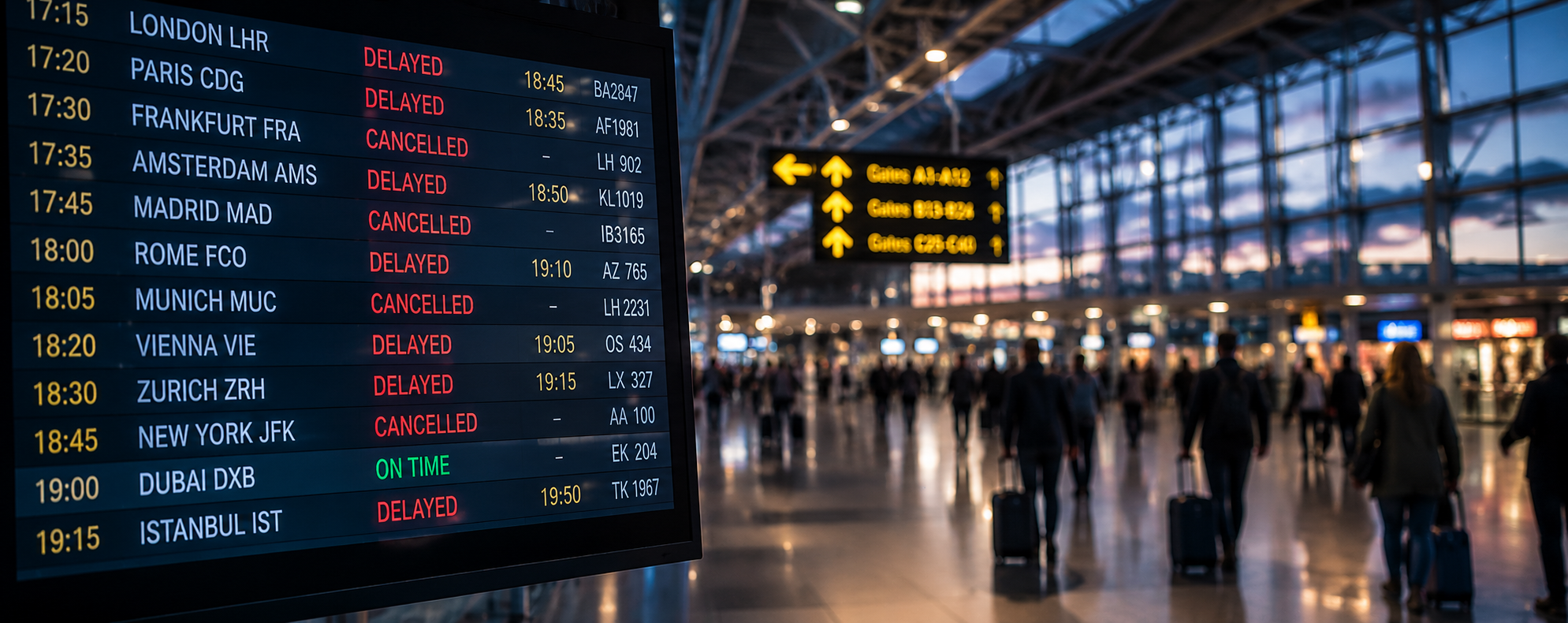
- Proof of Disruption: Photos of the departure board, screenshots of delay emails, or official delay statements from the gate agents.
- Expense Receipts: Keep every receipt for meals, hotels, or transport incurred during your wait.
Conclusion
A rejection from an airline does not always mean the claim is invalid. In many cases, passengers simply lack the time, data, or legal support needed to challenge the decision.
At ClaimFlights, our role is to carefully review those cases and pursue valid claims using legal expertise, aviation data, and relevant court precedents in accordance with EU Regulation 261/2004.
If your flight was disrupted and your claim was rejected, it may still be worth reviewing the case. Our free compensation check allows you to verify your eligibility in just a few minutes. If we take the case and succeed, you receive the majority of the compensation, because our service operates on a no-win, no-fee basis.
FAQs